
Munich main line, main station tunnel VE30
Location:
Munich
Build time:
2018 - 2035
Client:
DB InfraGO AG
Munich main line, main station tunnel VE30
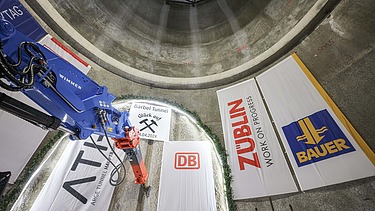
As part of the Munich 2nd main line rail project, DB InfraGO AG has commissioned Ed. Züblin AG in a joint venture with construction lot VE30 (shell construction of the Tunnel West and the main station stop).
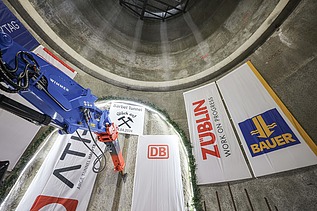
Two single-track tunnels with a total length of 6,052 m will be constructed for the future suburban railroad traffic using hydro-shield tunnelling with a single-shell segmental lining. To explore the subsoil conditions and on the basis of the concept for escape and rescue in the final state, a further, third tunnel tube will be driven, also using hydro-shield tunnelling with a single-shell segmental lining, which will be located between the two traffic tunnel tubes.
So-called cross-passages, which connect the two traffic tunnel tubes and the third tube, the exploratory and rescue tunnel, every 370 m, serve as a connection between the individual tubes. The cross-passages will be driven conventionally using the shotcrete method and lined with three shells (shotcrete, KDB sealing and in-situ concrete inner shell). Following the TBM drives, these cross-passages will be atmospherically constructed, if necessary under the protection of ground freezing.
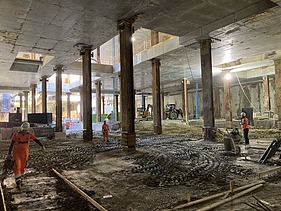
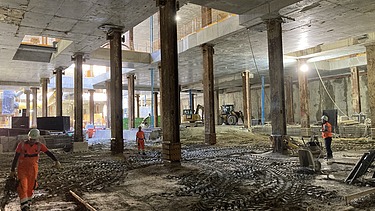
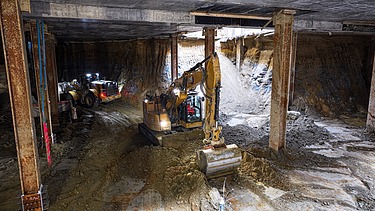
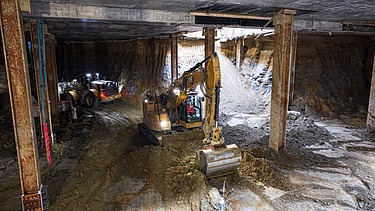
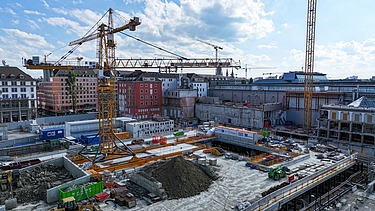
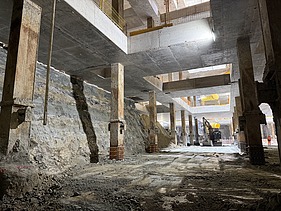
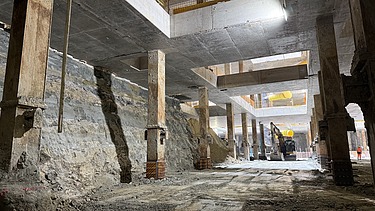
The structural connection of all tunnel tubes to the main station stop will be made via a new station structure to be built using the diaphragm wall/cover construction method under the protection of a 45 m deep excavation pit with up to 54 m deep diaphragm walls and up to 56 m long primary supports. Once the TBM drives have been completed, the future platform tubes will be driven from the lowest level of the station using shotcrete construction under compressed air and will also have three shells.
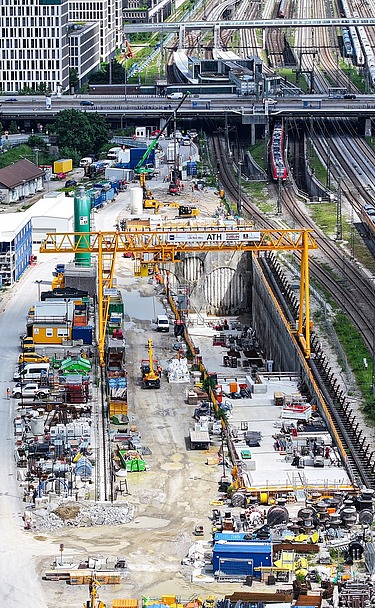
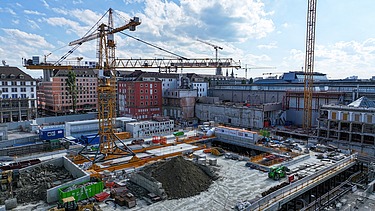
At the western end of the construction lot in the track apron of the main station, the transition from the mining construction method to the open route will take place over a length of 195 m using the open construction method with single and double-cell rectangular frames in the protection of an excavation pit up to 19 m deep, which is secured with overcut bored piles and several anchor layers.
Following this, a 63 m long trough cross-section will be built - also using the open construction method - in the protection of a shoring consisting of bored piles and sheet pile walls.
-
-
-
-
-