
Stuttgart 21 underground station (S21)
Location:
Stuttgart
Build time:
2012 - 2026 (shell construction)
Client:
DB Stuttgart-Ulm GmbH project
S21 Underground station
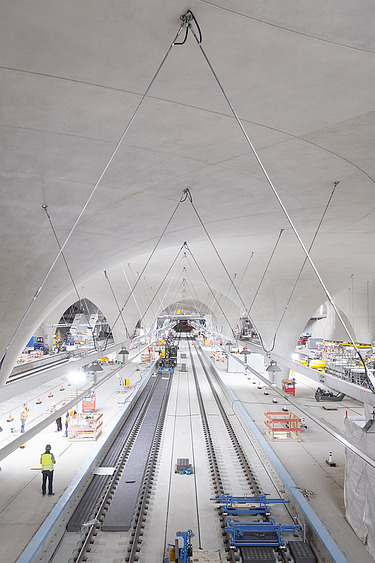
850 meters long, 80 meters wide, 28 chalice-shaped supports: The new Stuttgart 21 underground station is a milestone for modern infrastructure and a prime example of the highest art of engineering. ZÜBLIN relies on digital planning, innovative construction methods and maximum precision to realize one of the most complex projects in Europe.
Stuttgart 21 - The underground station as a new benchmark for modern infrastructure
The Stuttgart 21 project is one of the largest and most ambitious infrastructure projects in Europe. The aim is to convert the existing terminus station into an ultra-modern, underground through station that will connect the state capital Stuttgart to the European high-speed rail network. Ed. ZÜBLIN AG's Civil Engineering and Infrastructure Construction division is playing a key role in the realization of this once-in-a-century project, setting new standards in civil engineering and infrastructure construction.
Our mission, scope of services and challenges
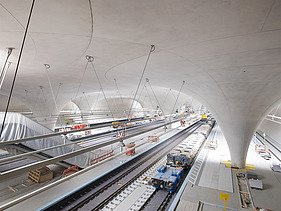
ZÜBLIN is responsible for the construction of the new underground station. Work began in 2012 and includes the construction of the 450-metre-long and around 80-metre-wide platform hall, the construction of the tunnel structures at the north and south ends as well as extensive infrastructure measures such as culvert structures, media channels and the conversion of the S-Bahn. The underground station is being built under complex inner-city conditions and during ongoing operations. In addition to the open construction of the tunnel heads and the hall, special civil engineering work and underpinning of listed buildings are required. ZÜBLIN relies on the use of BIM (Building Information Modeling) for the digital planning and control of such a complex large-scale project
Architectural and technical masterpiece
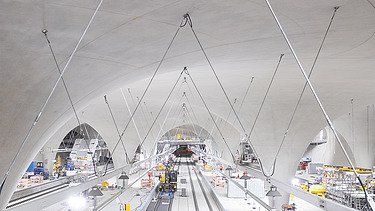
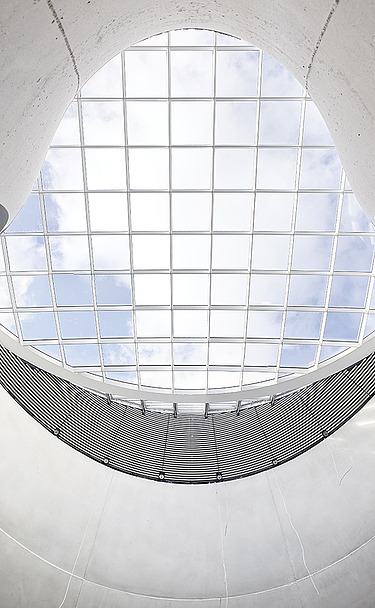
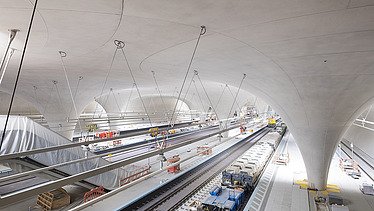
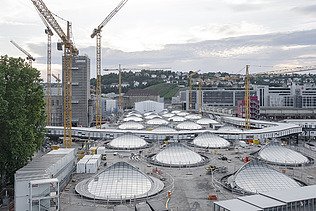
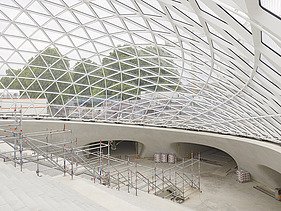
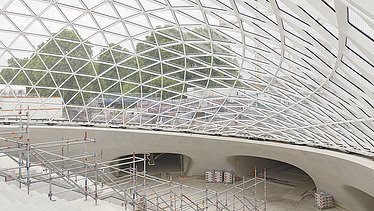
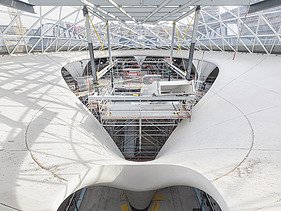
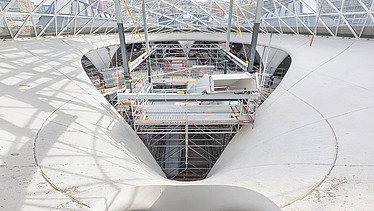
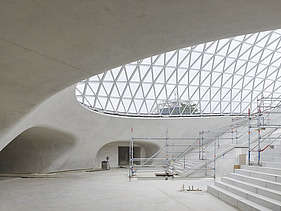
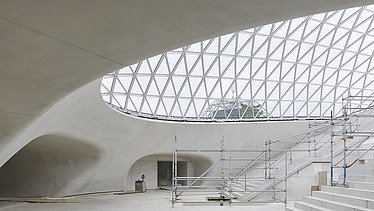
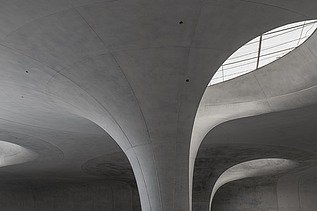
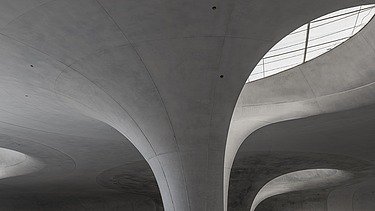
The architectural highlight of the new station is the light-flooded shell roof, supported by 28 monumental chalice-shaped columns. Each of these columns is unique in terms of shape, inclination and height and places the highest demands on planning, formwork and concreting. State-of-the-art processes were used for production: digital 3D models, CNC technology and high-precision formwork systems from ZÜBLIN Timber. Approximately 720 cubic meters of concrete and around 350 tons of reinforcing steel were used per chalice column, a total of over 53,000 square meters of curved exposed concrete formwork class SB4. The chalice columns are not only structural elements, but also characterize the appearance of the light-flooded, futuristic station and create a unique combination of functionality and design.
-
-
-
-
-
-
-
-