
Bürotel at the water tower
Location:
Karlsruhe
Build time:
4/2021 - 6/2024
Client:
Timon Bauregie GmbH & Co KG
Bürotel am Wasserturm, Karlsruhe
The "Bürotel am Wasserturm" is a modern ensemble of buildings in Karlsruhe that combines historical architecture with contemporary use. Thanks to the close cooperation of all project participants, the complex construction project was completed on schedule despite logistical and technical challenges.
Bürotel am Wasserturm: Modern working environments in the heart of Karlsruhe
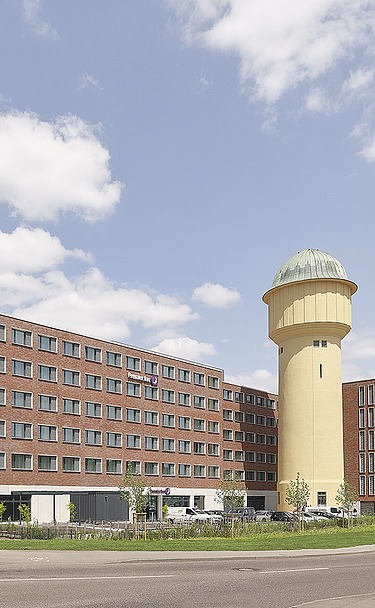
The "Bürotel am Wasserturm" project in Karlsruhe is a pioneering construction project that combines historical architecture with modern forms of use. Located directly next to the main railway station, the ensemble combines office space and a hotel with a listed water tower, thus setting an urban development example for the connection between past and present.
Challenge and collaboration: a project with precision
The location of the construction project placed special demands on planning and execution. The proximity to the Deutsche Bahn railway tracks and the inner-city traffic situation directly at Karlsruhe's main railway station demanded well thought-out logistics and a high degree of coordination. The client TIMONGRUPPE, the general contractor Ed. Züblin AG and the specialist planners worked closely together to solve the complex framework conditions. Despite delivery bottlenecks due to the pandemic, construction was completed on schedule: It started in summer 2020 and was completed in the first quarter of 2023.
Architecture with character: function meets form
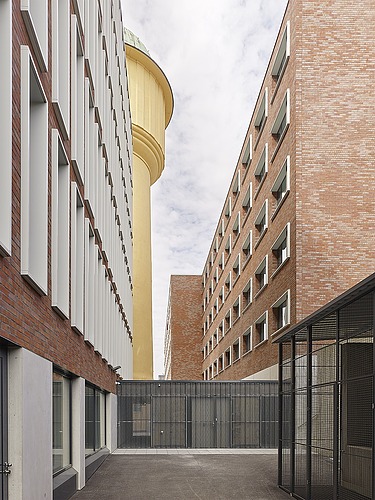
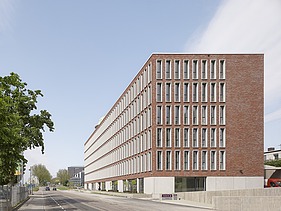
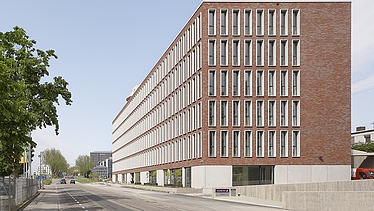
The project consists of two buildings, each with six full storeys and a shared underground car park. In total, the ensemble comprises around 20,000 m² of gross floor space. Around 5,770 m² of this is modern office space, while around 200 hotel rooms are used by the Premier Inn Hotel. The buildings are connected on the first floor by a plinth, which surrounds the historic water tower and sets it off architecturally.
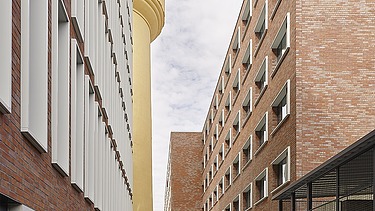
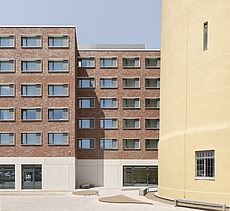
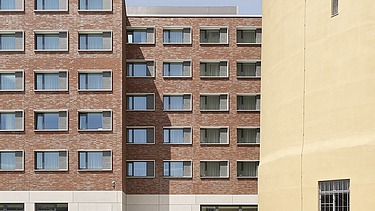
The design was created by Peter W. Schmidt Architekten GmbH, which won the competition for this ambitious project. The façades combine exposed concrete in the base area with coarse clinker brick slips on the upper storeys. Metal window surrounds and different window formats emphasize the functional diversity and give the ensemble a clear, modern aesthetic. The water tower remains the central eye-catcher and creates exciting lighting situations that particularly emphasize the urban integration.
Technical implementation: efficiency through planning
A detailed planning and optimization phase was carried out before the actual start of construction. The aim was to tailor the building technology to the needs of the future users and at the same time simplify the construction processes. The implementation was based on the LEAN construction principle, which aims to achieve a structured and efficient construction method.
The construction of the excavation pit was particularly challenging. The proximity to the railroad tracks, high levels of pollutants in the soil and the need for dewatering required special technical solutions. These were successfully developed and implemented in close cooperation with the civil engineering department, Deutsche Bahn and the client.
The underground car park offers 123 parking spaces, including charging infrastructure for electric vehicles and around 200 bicycle parking spaces. The project thus meets the requirements of modern mobility and supports sustainable urban development. This is complemented by energy-efficient building technology and resource-conserving construction methods that minimize the ecological footprint of the ensemble.
Significance for Karlsruhe: A new landmark is being created
The Bürotel am Wasserturm is more than just a functional ensemble of buildings. It is a symbol of the combination of tradition and modernity. With its central location at Karlsruhe Central Station, it strengthens Karlsruhe's economic attractiveness and creates urgently needed office space as well as additional hotel capacity. The successful integration of the historic water tower into a modern environment makes the project a new urban landmark for the city.
-
-
-