
Institute of Computer Science and Mathematics, Goethe University
Location:
Frankfurt am Main
Build time:
01/2024 - 10/2025
Client:
Landesbetrieb Bau und Immobilien Hessen (LBIH)

New construction of the Institute of Computer Science and Mathematics, Goethe University
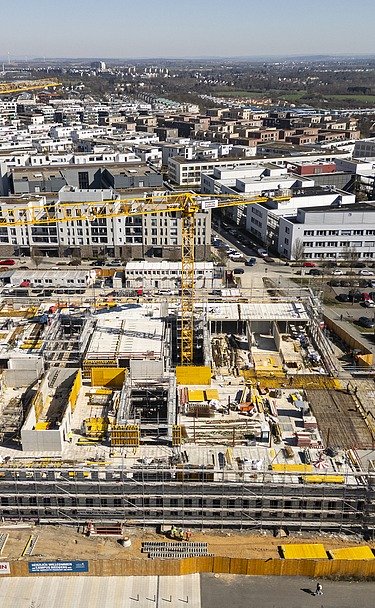
The new institute building for computer science and mathematics at Goethe University is being built on the Riedberg campus - an architecturally sophisticated research and teaching location. ZÜBLIN was responsible for the extended shell construction work with complex formwork planning, high-quality SB3 concrete surfaces and complete infrastructural development.
Institute of Computer Science and Mathematics – Goethe University Frankfurt
The Landesbetrieb Bau und Immobilien Hessen (LBIH) and Goethe University Frankfurt are continuing the development of the Riedberg science campus with the construction of the new building for the Institute of Computer Science and Mathematics. The new building forms the final component of the campus and brings together the facilities previously distributed across the Bockenheim campus.
The striking structure forms the northern entrance to the Riedberg campus and acts as an architectural gateway to "Science City Riedberg". The institute building comprises four above-ground and two underground storeys with a gross volume of around 45,000 m³ and a gross floor area of around 20,000 m². Offices, seminar rooms, lecture halls, communication zones and communal areas are accommodated on a usable area of around 8,700 m². The clear building structure with a central access axis and four green inner courtyards creates bright, open working areas and promotes interdisciplinary exchange between students, teaching staff and researchers.
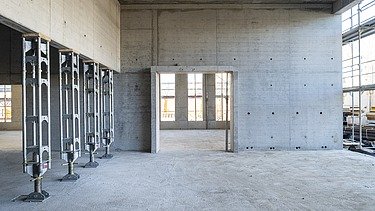
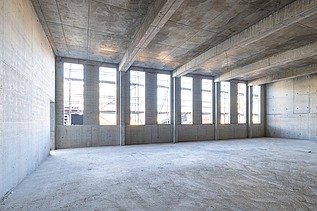
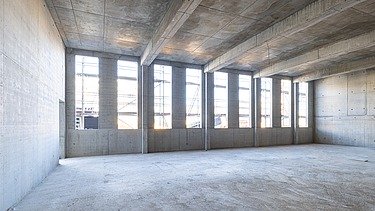
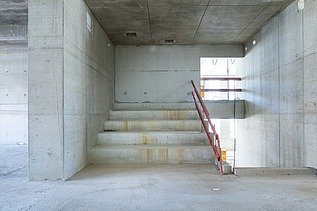
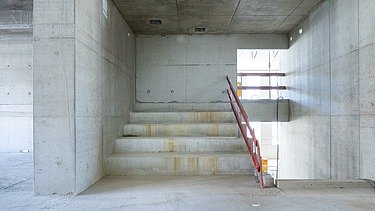
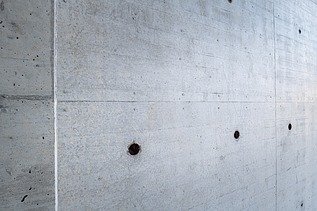
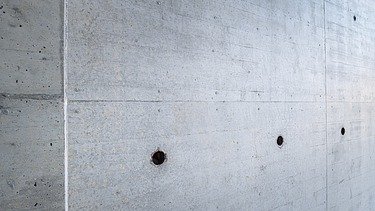
Our scope of services includes all earthworks and shoring work, the construction of the foundation pipes, masonry and concrete work, waterproofing work and the installation of composite structures. A special feature is the approximately 14,000 m² of SB3 exposed concrete surfaces with a slightly absorbent wooden formwork skin, which give the building its striking entrance design. The four stairwells and the wall areas of the up to three-storey lecture theatres were also constructed entirely in SB3 quality. Thanks to in-house formwork planning, it was possible to achieve a precise formwork pattern despite complex storey offsets and varying ceiling heights.
The excavation pit for the two basement levels was constructed in the densely built-up urban area using embankment and Berlin shoring. The high groundwater level and the planned modern technology in the basement rooms – including the computer center, robot laboratories and archives - placed high demands on planning and execution.
In the shell construction, 8,200 m² of hollow planks with partial concrete core activation were installed for energy-efficient air conditioning of the building. The interlocking hollow planks, composite columns and Deltabeam systems were installed smoothly using two building construction cranes thanks to forward-looking factory and installation planning. The production and concreting of the steel composite columns and ensuring the surface quality posed particular challenges. Optimised planning of the precast staircase components and the 90 m long steel composite girder system meant that additional mobile cranes were not required at all.
Parallel to the shell construction work, the infrastructural development was carried out – including service water cistern, connection to the service and rainwater network and empty conduit systems for the university's own fiber optic network.
With the planned completion in 2027, Goethe University Frankfurt will have a modern research and teaching infrastructure that impresses with its technical precision, architectural clarity and sustainable construction. The new institute building will strengthen the Riedberg campus as an important scientific location in the region and make an important contribution to the further development of the university's infrastructure.
-
-
-
-
Characteristics
- Converted space / BRI: 44,894.00 m³
- Gross floor area (GFA): 20,455 m²
- Above ground: 4 storeys
- Underground: 2 storeys
-
Construction time
- Construction site installation from 11.03.2024 to 27.03.2025
- Earthworks from 11.03.2024 to 01.06.2024
- Shell construction work from 01.04.2024 to 27.03.2025
- Completion 27.03.2025
-
Construction site regular operation
- Monday to Friday 07:00 to 18:00
- Saturday 07:00 to 13:00
- There is generally no work on Sundays and public holidays.
Certified by the German Sustainable Building Council (DGNB)
Ed. Züblin AG is pursuing several goals with this project: A sustainable construction site organisation, the conservation of resources as well as the minimisation of emissions, responsibility for the health and well-being of the builders, the cultivation of good neighbourliness and, of course, high-quality construction. For this, Ed. Züblin AG was the first company to be recognised by the German Sustainable Building Council (DGNB).
You can find more information about the DGNB system for sustainable construction sites here: https://www.dgnb.de/en/certification/buildings/construction-site
Selected measures in the project
-
Finished parts
The extensive use of prefabricated parts (prefabricated ceilings, prefabricated stairs and steel composite beams/columns) results in shorter construction times. These prefabricated orders also reduce the amount of waste.
-
Saving resources and reducing emissions through LEAN Construction
As part of the lean approach, a production plan with call-off dates (e.g. finished parts) was created. Construction production planning is detailed on a weekly basis and adapted to actual production progress. Changes in the construction process are constantly taken into account and just-in-time deliveries can be better implemented. Repeat orders and new orders due to late changes to the plan are avoided.
-
Digitized concrete call-off
The in-situ concrete is organized via the digital concrete call-off. Input and dispatch are therefore fully digitized. This means that the use of printers and paper can be further reduced.
-
Energy management in construction
The aim of just-in-time delivery to the construction site reduces the need for multiple relocations or interim storage and therefore also the use of energy. Construction machinery and electrical equipment are only switched on when required and do not run continuously. The use of generators is completely dispensed with.
| Certification contact person | Stefan Kleinfeldt |
| Project contact | Jonas Kahle |
| Construction site address | Riedbergallee 60438 Frankfurt am Main Phone +49 69-60608-1000 ZÜBLIN Subdivision Central Secretariat Unit RI1 |
| Download | Press release |
| Link | DGNB: Certification |